
Vegans Are Fighting The Wrong War
It's not a diet, but does it matter if people think it is?

Here’s the scene: Someone just posted on Instagram saying they were vegan but had to stop because of health issues, and the comments come rolling in.
Vegans, instead of asking what they were eating or pointing them toward resources, start a pile-on. “Well, veganism isn’t a diet, so you clearly didn’t understand what you were doing.” Or some variation of that. It’s smug, it’s unhelpful, and it misses the point.
There’s a difference between being right and being effective, and I think this could be doing damage.
The is/ought problem
There’s a concept in philosophy called the is/ought distinction, and I think it loosely applies to what I’m highlighting today. Basically, there’s a difference between how things are and how you think they ought to be. And you can’t just jump from one to the other without doing the work in between.
Language is a good example. Words mean what people generally understand them to mean. That’s how language works. You can make the case that certain words ought to mean something different, or that you ought to use certain words over others, but you can’t just assert that and expect everyone to fall in line. If you skip the work in between, you create friction, distractions and confusion.
A lot of what I see from vegans online (myself included in the past) is exactly this. Taking how things ought to be and asserting it as if it’s already how things are, with no acknowledgment that there’s a massive gap in the middle that needs to be bridged. And instead of bridging it, we end up creating unnecessary arguments.
The words we’re fighting over
A few things I see a lot in vegan spaces:
“Don’t say meat, say flesh”
“Don’t say meat-eaters, say non-vegans”
“Veganism isn’t a diet”
“The correct definition is…”
The thinking behind these points is that using mainstream language somehow undermines veganism or makes it look like a diet, and veganism looking like a diet is a huge problem.
I get where it comes from, I used to say things like this all the time. But I’m no longer convinced this is as big an issue as it’s made out to be (with some caveats that we’ll get into later). I actually think making these suggested language changes and hyper-focusing on definitions can create more issues for our advocacy.
Note: Just for anyone unaware, the definition of veganism by The Vegan Society is:
“Veganism is a philosophy and way of living which seeks to exclude—as far as is possible and practicable—all forms of exploitation of, and cruelty to, animals for food, clothing or any other purpose; and by extension, promotes the development and use of animal-free alternatives for the benefit of animals, humans and the environment. In dietary terms it denotes the practice of dispensing with all products derived wholly or partly from animals.”
Say I want to talk about the meat industry’s use of gas chambers to kill pigs. An important topic, and the kind of thing that can genuinely disturb people and make them reconsider what they’re funding.
I could write: “What most non-vegans don’t know is that the pig flesh industry uses gas chambers to murder pigs.”
What happens? The comments section fills up with arguments about the word “flesh” and whether killing an animal constitutes “murder”, as well as some annoyed at being labelled “non-vegan”. And the gas chambers? That point is buried under these arguments about semantics.
One of the first rules of persuasion is to speak the same language as the people you want to persuade. As in, use words they recognise and understand, not words that will likely confuse or trigger them.
Instead, I could write: “What most people don’t know is that the meat industry uses gas chambers to kill pigs.”
It’s the same information, but in language people already understand. There’s less unnecessary friction, and now the conversation is actually about what I wanted it to be about, the pigs and the gas chambers.
Even,“what most meat-eaters don’t know is that the meat industry uses gas chambers to kill pigs” could work here, although this post invites more hostility than saying “most people” simply because it feels more targeted.
This is the is/ought problem I mentioned earlier in action. You can feel that terms like “flesh” and “non-vegan” are more accurate or preferable words based on what you personally believe, and you can work toward a world where that’s how everyone talks. But if you assert it while trying to make a completely different point, you’ll most likely end up derailing your own message.
You can’t fight every battle at once, you have to pick the ones that matter the most. The ones that are likely to have the biggest impact.
Why diet should be the priority
Here’s something I don’t think gets said enough: human consumption is by far the animal’s biggest issue.
Ending animal agriculture and the consumption of animals would end the vast majority of animal exploitation. The scale of it with the factory farms, fishing, the slaughterhouses, the sheer number of lives involved. There’s nothing else that comes close. So if we’re trying to figure out where to focus our energy, I think the answer seems quite obvious.
Veganism isn’t just a diet. I know that. But the way some vegans react when someone describes it as a diet, you’d think it was the worst thing that’s ever happened.
“It’s a justice movement and everyone needs to understand the true definition of veganism right now.”
Does everyone need to understand the full scope of veganism from the very beginning? Why? If someone has eliminated animal products from their diet because they believe it’s wrong to harm animals, they’re doing one of the most impactful things they can do. Does it matter whether they’ve read the Vegan Society’s definition? Or done in-depth research on the founders of veganism and how they defined it? I’m not convinced it does.
If someone is ready to change what they consume for animals, don't shove them back just to win a definition fight.
But what I do think matters is when people think veganism is purely a health or environmental choice, because those reasons tend not to stick. People make exceptions for themselves all the time when it comes to their own personal benefit. Plus, someone can consume animal products while being healthy and environmentally friendly (say they eat one piece of cheese a year, or something like that).
But when it’s about the animals, something bigger than yourself, this tends to keep people committed. There is no animal-friendly way to breed, exploit and kill animals. So while I’m not that concerned with people seeing veganism as a diet, I do think the ethical focus is very important.
What’s the actual worst case?
Let’s play this out. Worst case scenario: veganism becomes widely understood as simply an ethical diet. People stop eating animal products because they believe it’s wrong. Animal farming collapses. Slaughterhouses close. Factory farms disappear.
What exactly is the problem here?
Do we really believe that in a world where people no longer consume animals or animal products for ethical reasons, they’d still be fine with animal testing? Killing animals for leather and fur? Still happy to support zoos that breed animals for profit? Still buying into the pet industry, breeding and trading animals for entertainment?
Do we honestly believe that people would extend moral consideration to “food animals” like chickens, pigs, cows and fish, but somehow stop and draw the line at all these other animals?
If we’ve actually managed to get people to connect with animals on that level, enough to change the most habitual, deeply ingrained behaviour there is, I think we’ve probably done the hard part.
I worry that this focus on people “misrepresenting veganism” could be more about protecting the identity of the vegan, and the movement, than about protecting the animals. If I’m being honest, back when I used to staunchly defend the definition of veganism I do think a lot of it was driven by my identity and a small obsession with being right, rather than what actually did or didn’t work to help animals.
Start helping
Back to the person who quit for health reasons.
Telling them they weren’t really vegan and don’t understand the movement doesn’t really help. It definitely doesn’t help the person, it’s unlikely to help the animals, and to outsiders, it makes vegans look like an unwelcoming and pedantic bunch.
What actually helps is addressing their concerns. Pointing them toward resources like Challenge22, reminding them why it matters and encouraging them to try again with proper support this time. That’s the difference between being right and being effective.
Even if we think the person is lying about their issues, providing this useful information helps others who may be watching on the sidelines. Dr Matthew Nagra is good at making videos that achieve this. In the video below, he calls out lies from an individual, while countering and providing information on her claims that soy disrupts hormones.
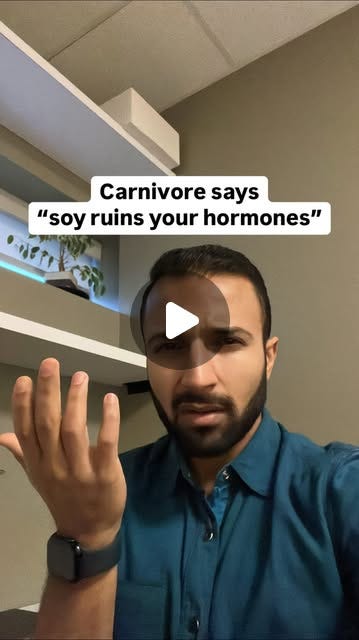
At some point we have to ask ourselves, are we just trying to maintain a club with strict entry requirements, or are we trying to build a successful movement? As you can see, Dr Nagra does the latter. His aim isn’t simply to entertain vegans, he’s trying to be persuasive and advocate for a way of eating that helps animals.
In the past, I’ll admit that I fell into the former category. I thought I was doing what was best for animals, but in a lot cases, I was probably just doing what felt best. And that tended to be more appealing to other vegans, rather than making change for animals.
I discussed this in detail in my first ever Substack post, “It’s Time Vegans Stopped Playing Alone in the Corner”, which you can read below.

So what should we be doing?
I think a lot of vegans assume that spreading the “true vegan message” is the most effective strategy, mostly because it makes sense to us. We understand it, we find it compelling, so naturally so should everyone else, right?
But that’s not how persuasion works.
I think the most effective thing you can do, especially right now, is to get people to change their behaviour. Specifically what they eat and buy. Getting them connected to why it matters for animals, and building momentum. As that grows, as animal-free consumption becomes the norm rather than the exception, we’ll have a much stronger platform to talk about the broader movement. And people will actually be ready to hear it.
But if we spend our energy arguing about definitions with people who are already moving our way, or lambasting people who are having issues and need support, I think we’re choosing to be right over choosing to make a difference. And I know which one I’d rather be doing.
I've always thought that arguments about wording are just arguments about values disguised as something else. The problem is, when we have proxy arguments ("don't call veganism a diet") we fail to actually talk about the important issues. Well said David.
Well said. It's an important issue. Something I have challenged myself many times — the vegan echo chamber. I devote a chapter to it in my book, because it comes with real risks to animal rights. Cowbells on the Kill Floor, if you ever want to give it a read.